FOLLOW US!

  • facebook link
  • twitter link
  • youtube link
  • instagram link

Tag: Astronomy 101

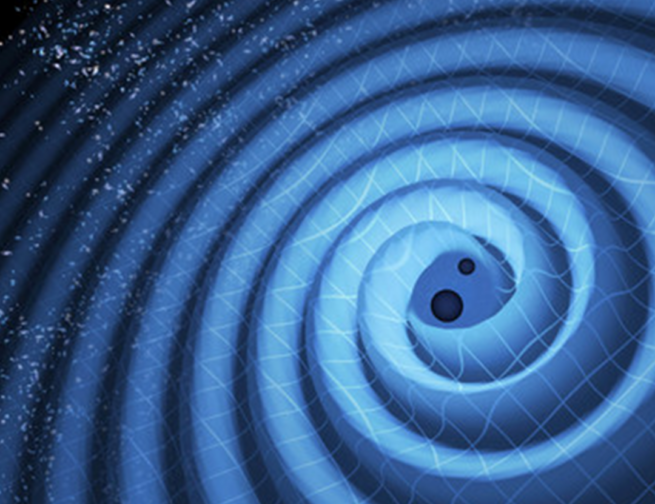
Illustration of gravitational waves after a merger of two black holes. Gravitational waves ripple outward as the black holes spiral toward each other. Image credit: LIGO/T. Pyle

What Are Gravitational Waves: A New Window Into The Universe

Tuesday January 6th
Adler Planetarium Staff

What exactly are gravitational waves and how have they changed the field of astronomy? Adler Astronomer, Dr. Michael Zevin, explains how gravitational waves allow us to hear the sounds of spacetime and how they will lead to new discoveries.
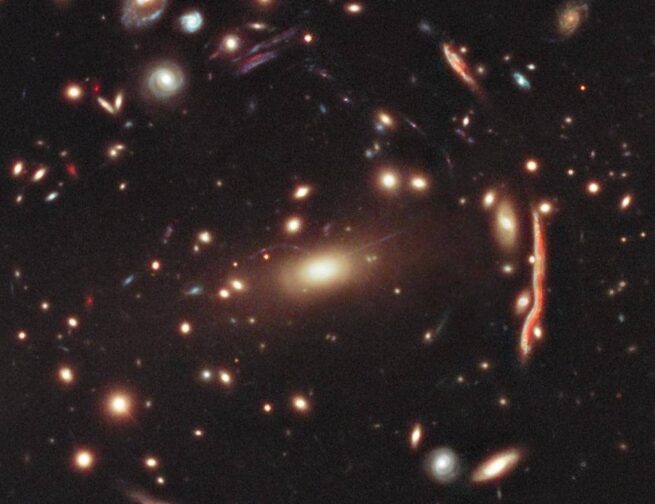
This image depicts a cluster of distorted galaxies. The distorted shapes in the cluster shown here are distant galaxies, from which the light is bent by the gravitational pull of dark matter within the cluster of galaxies.

What Is Dark Matter? The Spooky Case Of Dark Matter

Wednesday October 15th
Adler Planetarium Staff

What is dark matter? Has dark matter been discovered? Get an inside look at the history and continued discoveries within the field.
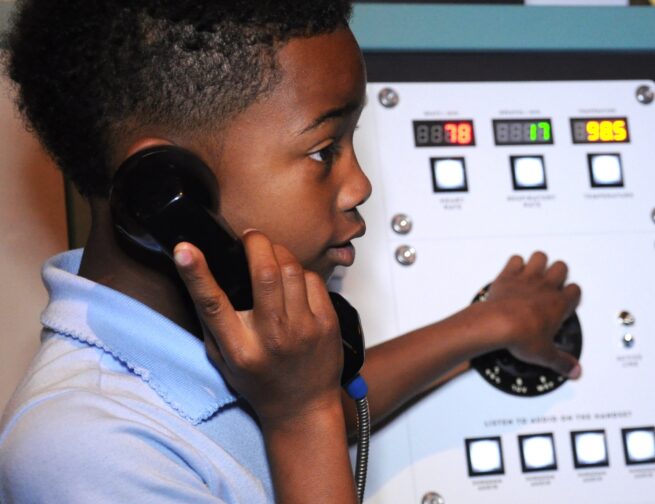
Child using phone in Mission Moon exhibit.

Can You Hear Sound In Space?

Friday June 6th
Rachel Van Clepper

How does sound work in space? Explore the science of sound and what that means for sounds in space.
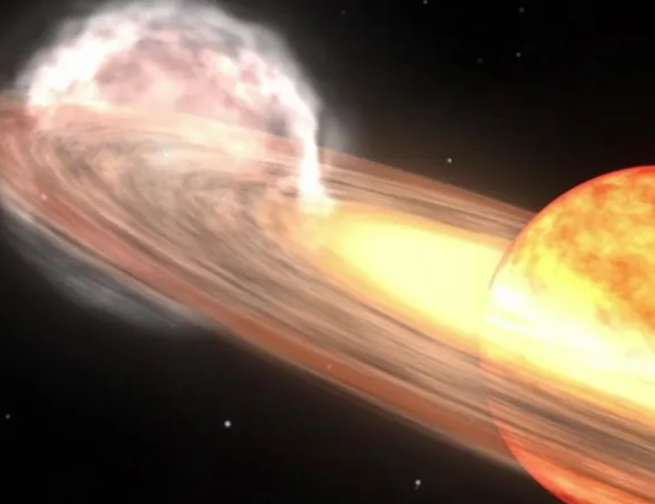
In this illustration, a white dwarf star and a red giant star orbit each other, resulting in a nova similar to the T Coronae Borealis nova that is seen every 80 years. Image credit: NASA/Goddard Space Flight Center

Novas Vs. Supernovas: What’s The Difference?

Tuesday June 18th
Adler Planetarium Staff

What is the difference between a nova and a supernova, and what causes them to explode? Adler Astronomer, Dr. Geza Gyuk explains.
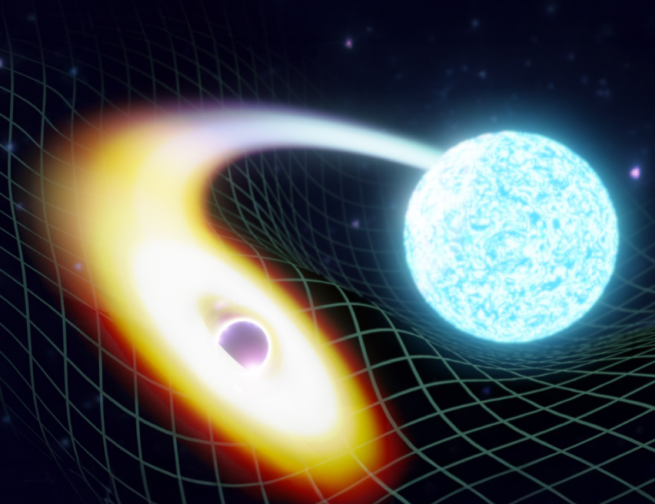
Artistic rendition of a black hole merging with a neutron star. Image credit: LIGO-India/ Soheb Mandhai

Gravitational Waves Unveil The Lightest Black Hole Yet

Monday May 6th
Adler Planetarium Staff

Gravitational wave GW230529 led to the discovery of a black hole in the mass gap and the lightest black hole ever observed. Adler Planetarium’s astrophysicist Dr. Michael Zevin co-lead the project and explains the findings.

PURCHASE TICKETS

Your all-access pass to our universe!

© 2026 Adler Planetarium | Privacy Policy | Contact Us