Adler Skywatch: February 2026
Header image: Silhouette of a person looking through a small telescope at dusk
Two planets that have been hidden in the glare of the Sun for some time begin to emerge into darker skies this month. Here’s your guide on what to see in the sky in February 2026!
Visible Planets In February 2026
How To See Mercury
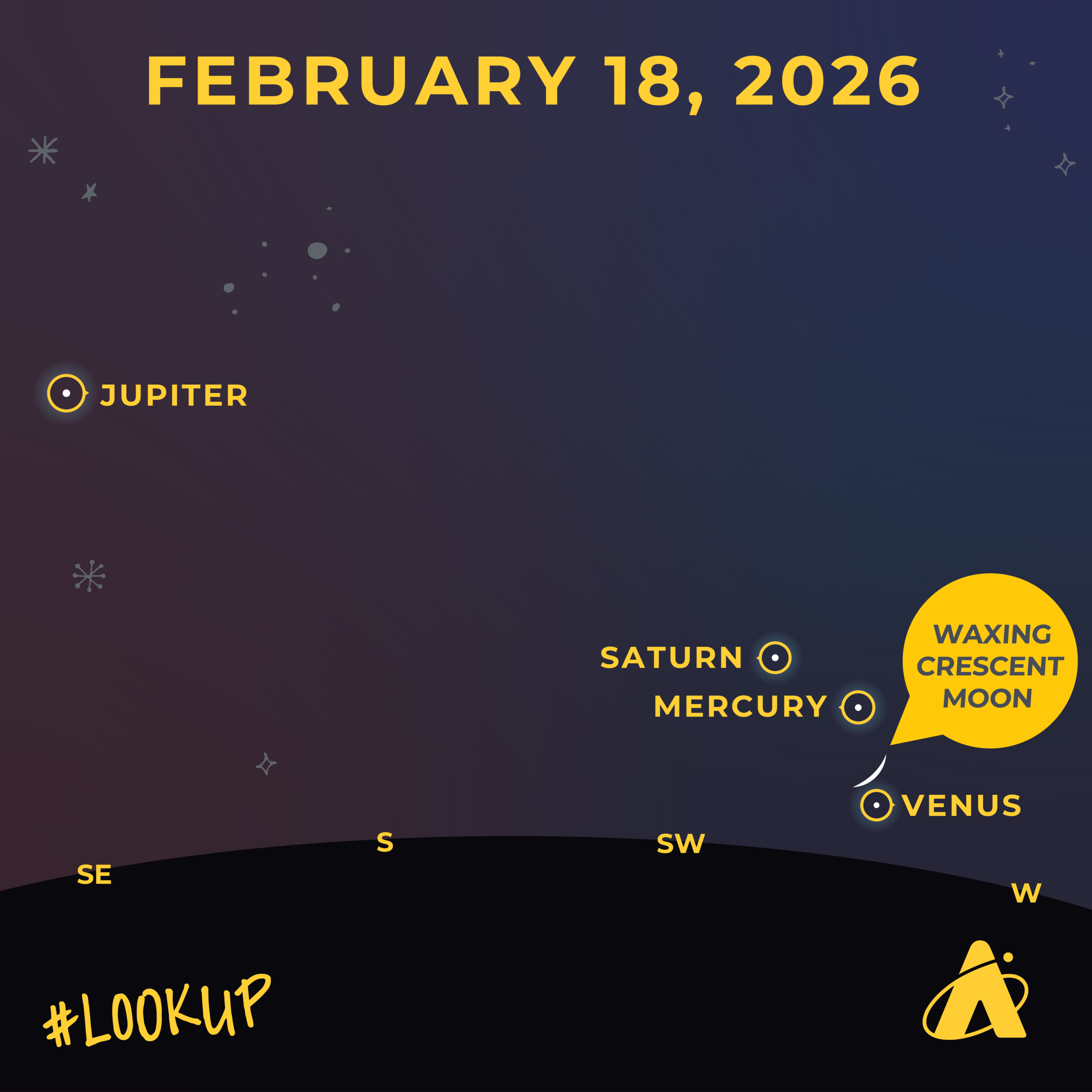
The planet Mercury appears to move away slightly from the Sun this month, having been too close to it last month for visibility. Mercury still appears somewhat close to the Sun in the sky, so you’ll need a clear view to the west-southwest horizon to spot it. To protect your eyesight, don’t attempt to look for Mercury until at least 40 minutes after the Sun is entirely below the horizon. This means any viewing must be done when the planet is very close to the horizon. The evening of February 18, the planet looms above the dark edge of the setting Moon, only one day after the new Moon. In the Chicago area, this conjunction is visible only a few degrees above the horizon, if at all.
Where Is Venus In The Sky?
During the last few days of February, if you can spot Mercury—and if your horizon sight-lines are clear—you may be able to also spot the brightest planet, Venus, slightly below and to the left of Mercury. But remember, don’t start looking until at least 30–40 minutes after the Sun is fully below the horizon. Next month, Venus will become much easier to see in the early evening.
How To See Saturn
For the past few months, Saturn has been the main evening planet visible to the naked eye. In February, Saturn sets earlier each evening, while the Sun sets later. By the end of the month, Saturn is setting less than two hours after the Sun. Look for Saturn now, while you can, since for most of March it will appear too close to the Sun for safe viewing.
Additionally, Saturn’s brightness is around magnitude 1 in February. At the start of the month, it appears in evening twilight about 30 degrees above the southwest horizon. By mid-February, it’s about 25 degrees in the west-southwest sky. By month’s end, it appears only about 15 degrees above the west-southwest horizon. The evening of February 19, Saturn appears less than three degrees to the left of a very slim waxing crescent Moon, creating a lovely planetary conjunction.
Jupiter In The February Night Sky
On the opposite side of the evening sky, Jupiter becomes the main sight. At brighter than -2 magnitude, it’s easier to spot than Saturn. In fact, it’s the brightest natural object, besides the Moon, in the evening sky for most of the month! However, when Venus comes back into view later in the month and into March, it will outshine Jupiter.
At the start of the month, Jupiter pops into view about 25–30 degrees high in the eastern sky during evening twilight. By the end of the month, it appears about 50–60 degrees high in the east-southeast. Around 9:30 pm, the planet reaches its highest point in the sky, about 70 degrees up in the south. It will set in the west-northwest around 6:30 am early in the month, and around 4:30 am late in the month. Plus, keep an eye out on the evening of February 26, when a waxing gibbous Moon appears roughly five degrees away from Jupiter.
The planet Mars is too faint and appears too close to the Sun this month to be readily visible.
How To See The Moon And Pleiades Conjunction
In January 2026, there was a conjunction—a close encounter—between the Moon and the Pleiades star cluster. This month, the pair meet again in the sky, and they appear even closer than they did in January! The night of February 23, the dark edge of the first quarter Moon grazes the Pleiades. Because the conjunction starts along the Moon’s dark edge, the star cluster should be easier to see than it was during last month’s conjunction.
Begin looking for the Moon and the Pleiades in the southwestern sky in evening twilight. The two are together for the rest of the night, setting within ten minutes of each other shortly after 1:00 am.
February’s Annular Solar Eclipse
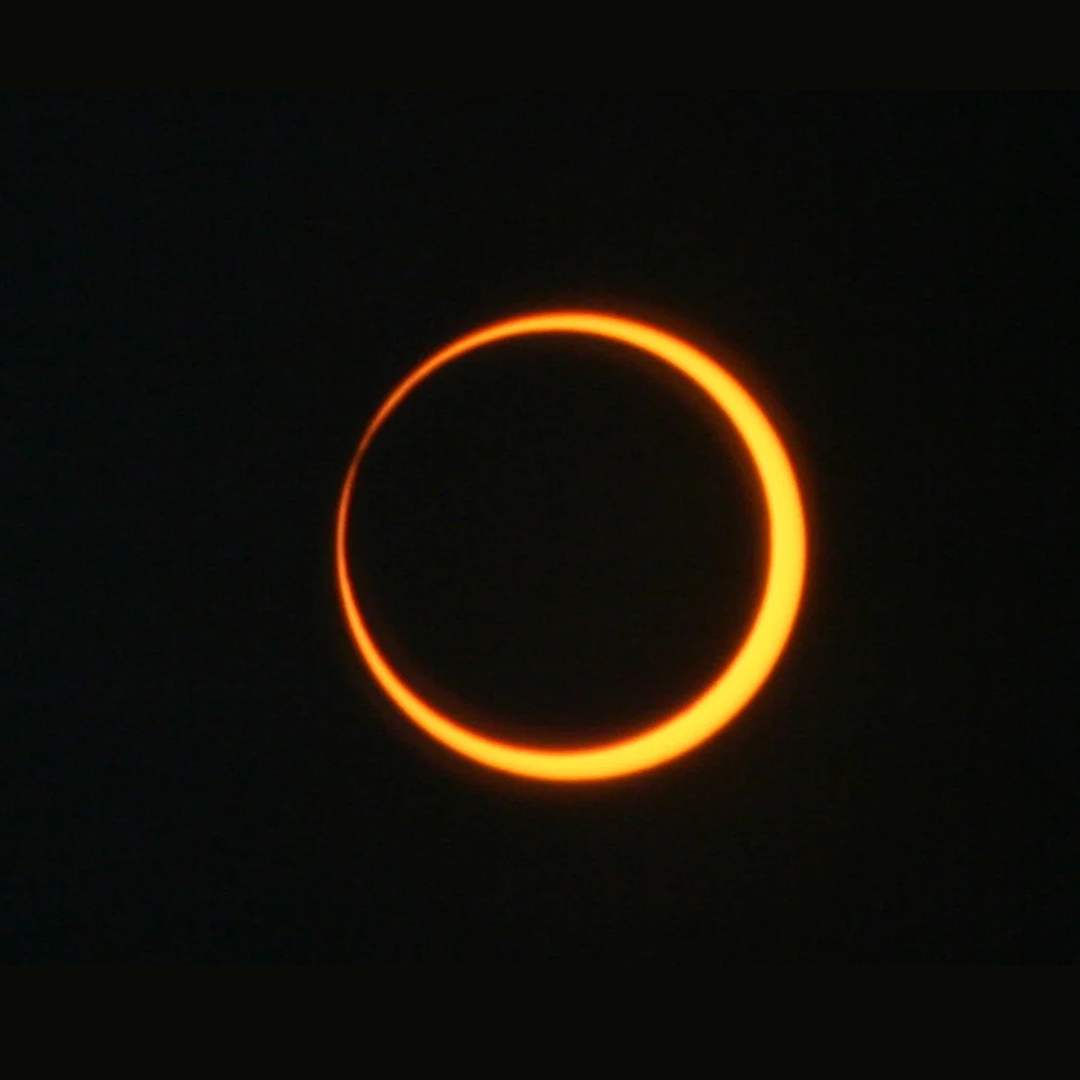
In case you’ve heard that a solar eclipse is occurring this month, it’s true, and it occurs on February 17. It’s an annular solar eclipse, meaning the Moon will not entirely block out the Sun’s disk, and will appear as a ring of light around the Moon as it eclipses the Sun.
Before you get too excited, the February 17 solar eclipse will not be visible in Chicago, or anywhere in North America. The full annular eclipse is visible only in Antarctica and the southern Indian Ocean. A partial solar eclipse is visible in limited locations in southern Africa and South America. If you’re located outside of the U.S., see if you can view the solar eclipse here.
February Moon Phases
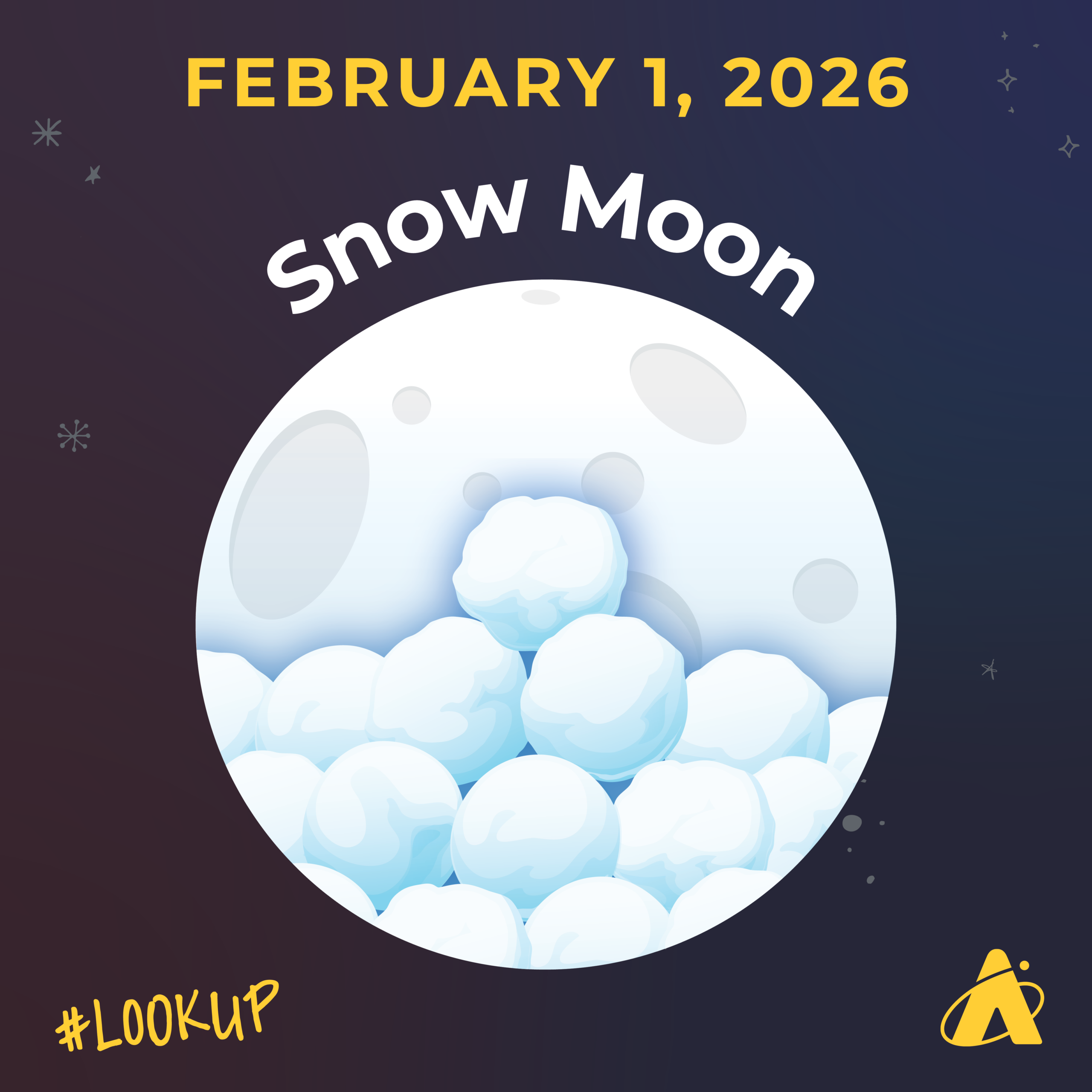
Full Moon: February 1
Last Quarter Moon: February 9
New Moon: February 17—Lunar New Year
First Quarter Moon: February 24
Please note: these descriptions are for the Chicago area, using Central time.
Get More Stargazing Tips
Get more tips on what you can see in the February sky! Hunter explains how to see the planetary parade of six planets at the end of February, 2026. Don’t miss a chance to see Saturn, Mercury, Venus, Jupiter, Neptune, and Uranus.

Subscribe To Skywatch Wednesday This February
Tour the sky with the Adler Planetarium’s Theaters Manager, Nick, in Skywatch Wednesday. Nick uses cutting-edge visualizations, NASA images, and astrophotography to show you what you can see in the night sky throughout the year.
Check out Nick’s latest episode to guide you through the winter night sky. Learn what stars, planets, and constellations you can see in the winter of 2025–2026. Discover how to find famous winter constellations like Orion, Taurus, Auriga, Canis Major and Minor, and the planets Jupiter, Venus, Mercury, and even Saturn without its rings. Plus, see the lunar occultation of Regulus in February!