Adler Skywatch: January 2026
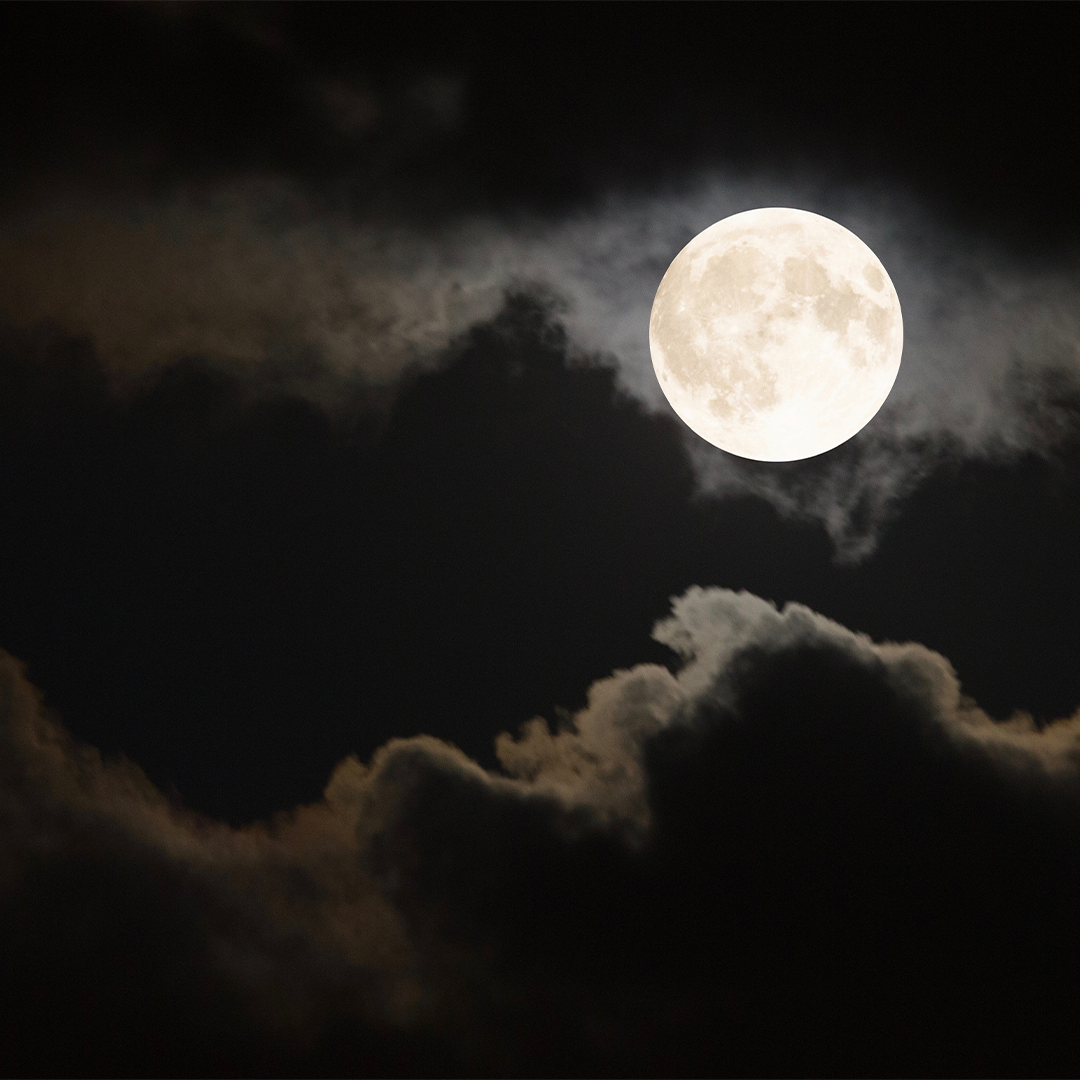
Header image: the full Moon in a dark, cloudy sky.
Both the Sun and the Moon get a little closer to Earth than usual this month, January 2026. Here is your guide to the January 2026 sky!
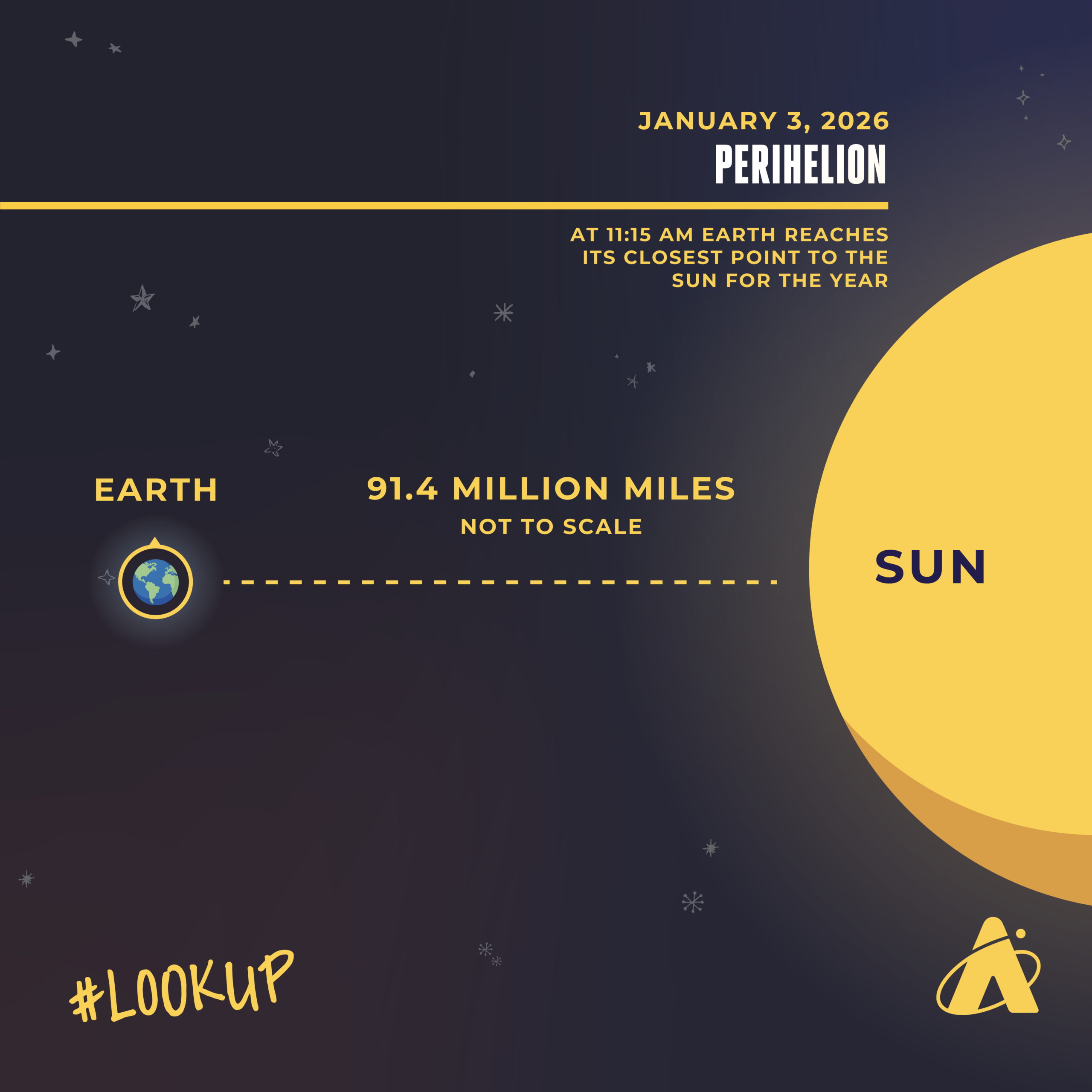
Earth’s Perihelion
Earth’s orbit around the Sun is not a circle—it’s more of an ellipse, a type of oval shape. A perfectly circular orbit would have the Sun at its center, with Earth an equal distance away year-round. However, with an oval-shaped orbit, Earth can be nearer or farther away from the Sun on a given date.
This year, Earth reached perihelion—AKA its closest point to the Sun for the year—on January 3 at about 11:00 am Central Time. During perihelion, the Earth and the Sun were 91.4 million miles apart. On average, Earth is about 93 million miles from the Sun. Conversely, during aphelion—Earth’s farthest point from the Sun—there is about 94.5 million miles between them. Aphelion occurs in 2026 on July 6. From perihelion to aphelion, there is a roughly three million mile difference in the Earth-Sun distance throughout its orbit.
January’s Supermoon
The final two full Moons of 2025 were considered supermoons due to their closer-than-usual positioning near Earth. The first full Moon of 2026—which occurred in the early-morning darkness of January 3—is also considered a supermoon—though not quite as “super” as the 2025 supermoons.
On average, the Moon is about 238,900 miles away. January 3’s full Moon was about 225,000 miles from Earth. The last two supermoons (on December 4 and November 5, 2025) were about 3,000 miles closer than this month’s full supermoon.
January Planet Spotting
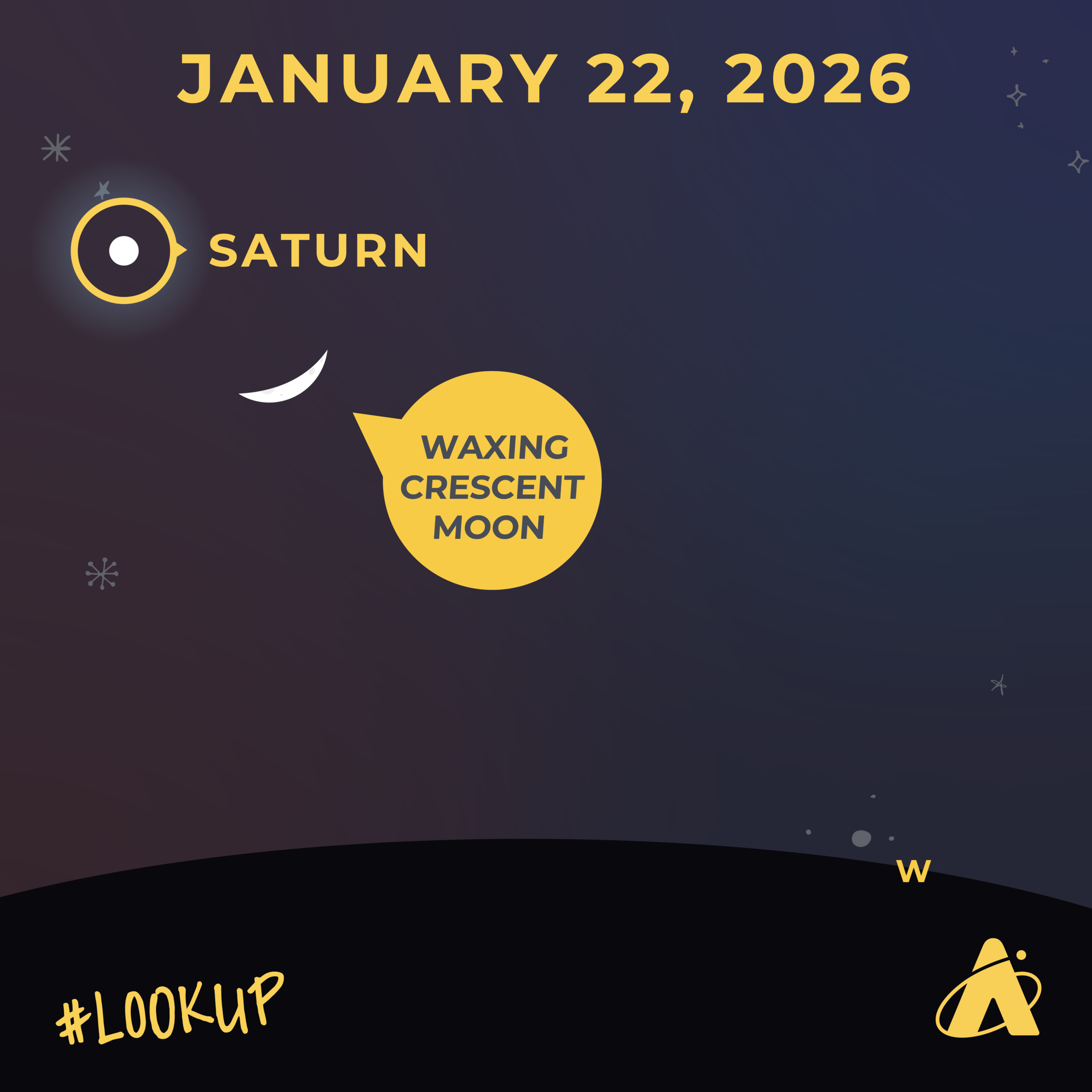
How To See Saturn
The planet Saturn is visible about an hour after sunset and roughly halfway up in the southern skies in January. Early in the month, it’s in the south-southwest skies, but with the Sun setting later each evening, it won’t be visible until it gets further west in the sky during evening twilight. By month’s end, look for Saturn in the southwest sky.
See Jupiter At Its Brightest
The bright planet Jupiter rises in the east-northeast near the end of evening twilight at the start of the month. As the evenings pass, Jupiter rises earlier, popping into view in evening twilight during mid-month. Late in the month, Jupiter rises in the east-northeast around 3:00 pm, when the Sun is still above the horizon in the west-southwest.
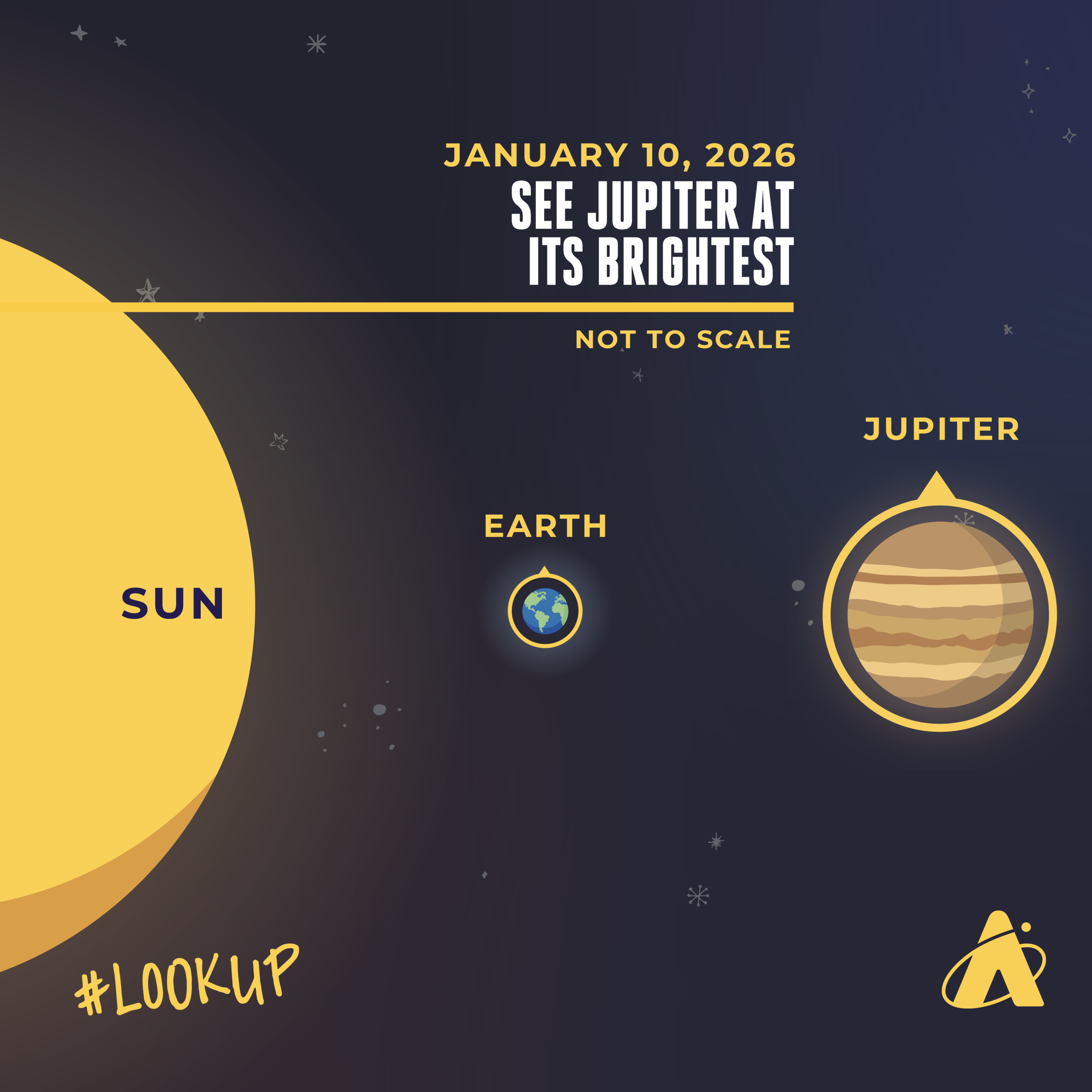
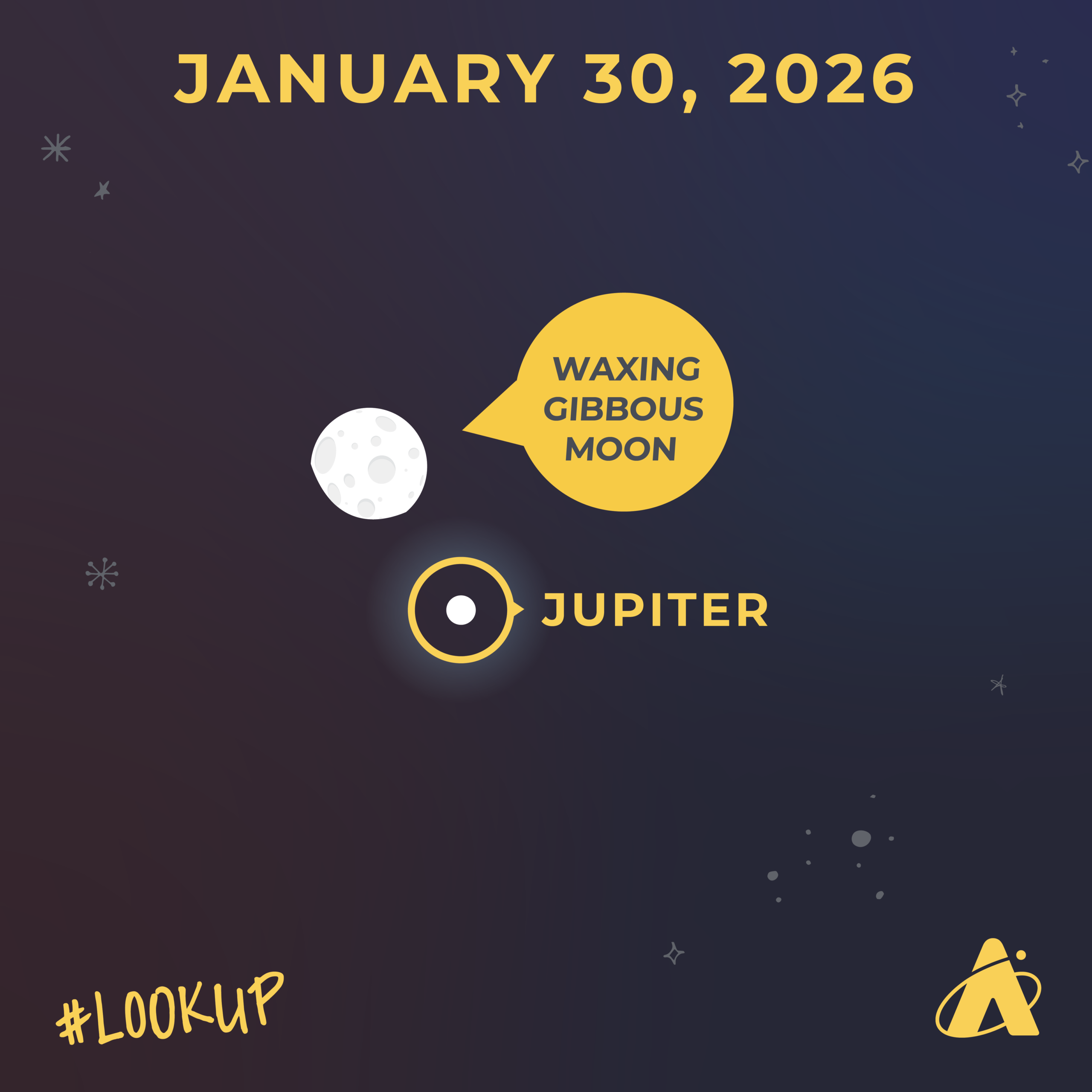
Its brightness is unmistakable, brighter than -2.5 magnitude. On January 10 it reaches opposition—its brightest point for the year. It’s about 70 degrees above the horizon around 12:30 am early in the month, around 11:30 pm mid-month, and around 10:30 pm late in the month. Jupiter will still be visible during morning twilight, low in the west-northwest sky. On the evening of January 30, you can use the Moon to help find it, as the waxing gibbous Moon will appear near Jupiter.
Where Are Mercury, Venus, and Mars?
The planets Mercury, Venus, and Mars spend the month clustered close to the Sun in the sky, and thus are not visible.
The Moon and Pleiades Conjunction
During evening twilight on January 27, keep an eye on the waxing gibbous Moon. The Sun sets around 5:00 pm this day, and if the sky is clear, you’ll also be able to see the Moon about 60 degrees high in the east-southeastern sky. About 60–90 minutes later, as the sky gets darker and the Moon gets higher, look again. Barely a degree away from the lit side of the Moon, you may be able to spot the Pleiades, a twinkly star cluster in the constellation Taurus!
The Moon’s light may prohibit seeing the nearby Pleiades until later in the evening, but this lovely star cluster remains within a few degrees of the Moon until it sets in the west-northwest around 2:30 am on January 28.
January 2026 Moon Phases
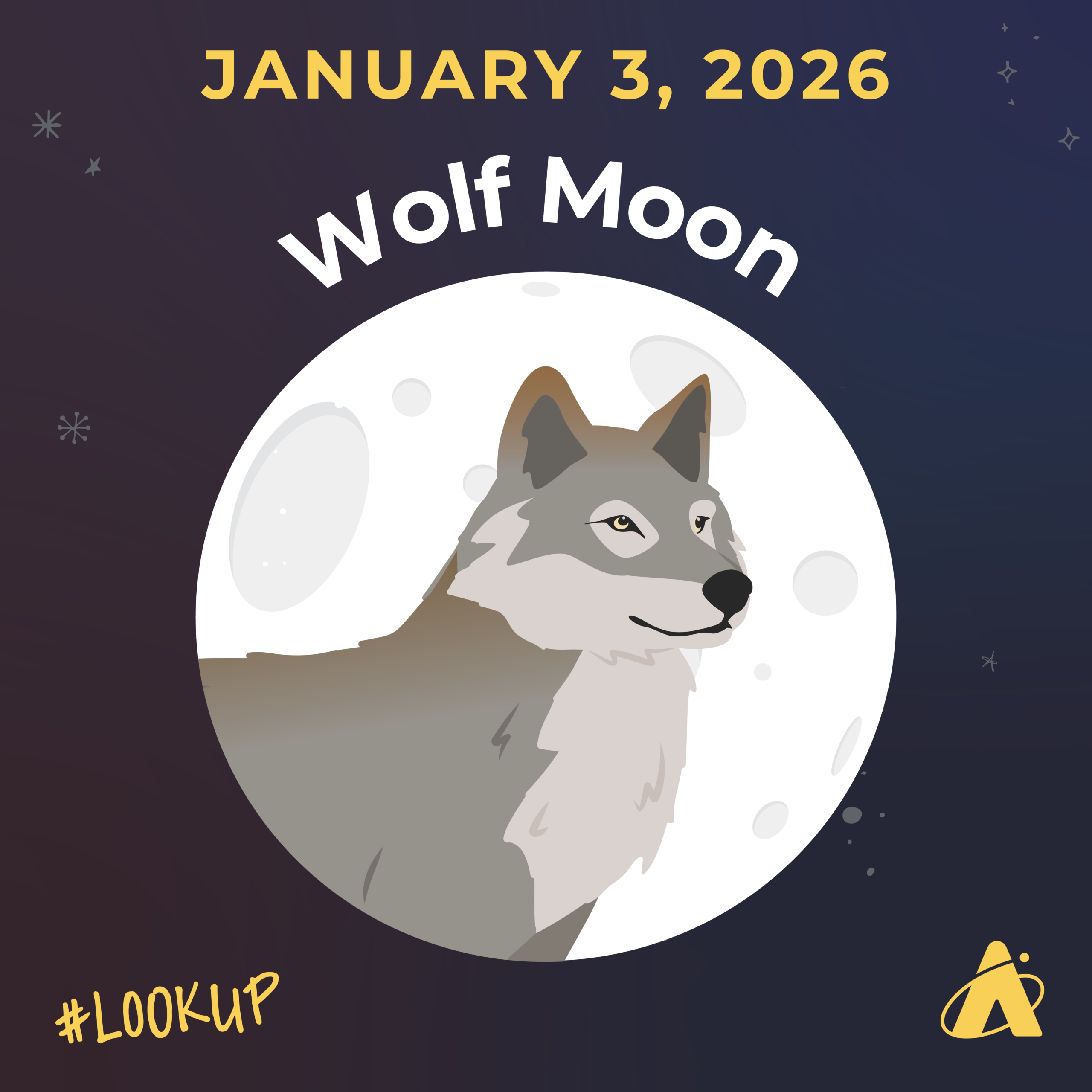
Full Moon: January 3
Last Quarter Moon: January 10
New Moon: January 18
First Quarter Moon: January 25
Please note: these descriptions are for the Chicago area, using Central time.
Subscribe To Skywatch Wednesday In The New Year
Tour the sky with the Adler Planetarium’s Theaters Manager, Nick, in Skywatch Wednesday. Nick uses cutting-edge visualizations, NASA images, and astrophotography to show you what you can see in the night sky throughout the year.
Check out Nick’s latest episode to guide you through the winter night sky. Learn how to find famous winter constellations like Orion, Taurus, Auriga, Canis Major and minor, and the planets Jupiter, Venus, Mercury, and even Saturn without its rings. Plus, see the lunar occultation of Regulus in February!
Learn From Our Astronomy Educators
Watch recaps of Sky Observers Hangout livestreams this January! Learn how to observe upcoming cosmic happenings, enhance your astrophotography skills, and see celestial objects through a telescope virtually with our astronomy educators.
In their latest episode, Michelle and Hunter guide you through a tour of the zodiac constellations. Explore the historical connections between astronomy and astrology, learn what signs of the zodiac you can see in the sky this winter, and observe some of the wonders found hiding within these famous constellations.